The Case for Reconsidering the MTA Southern Rail Expansion
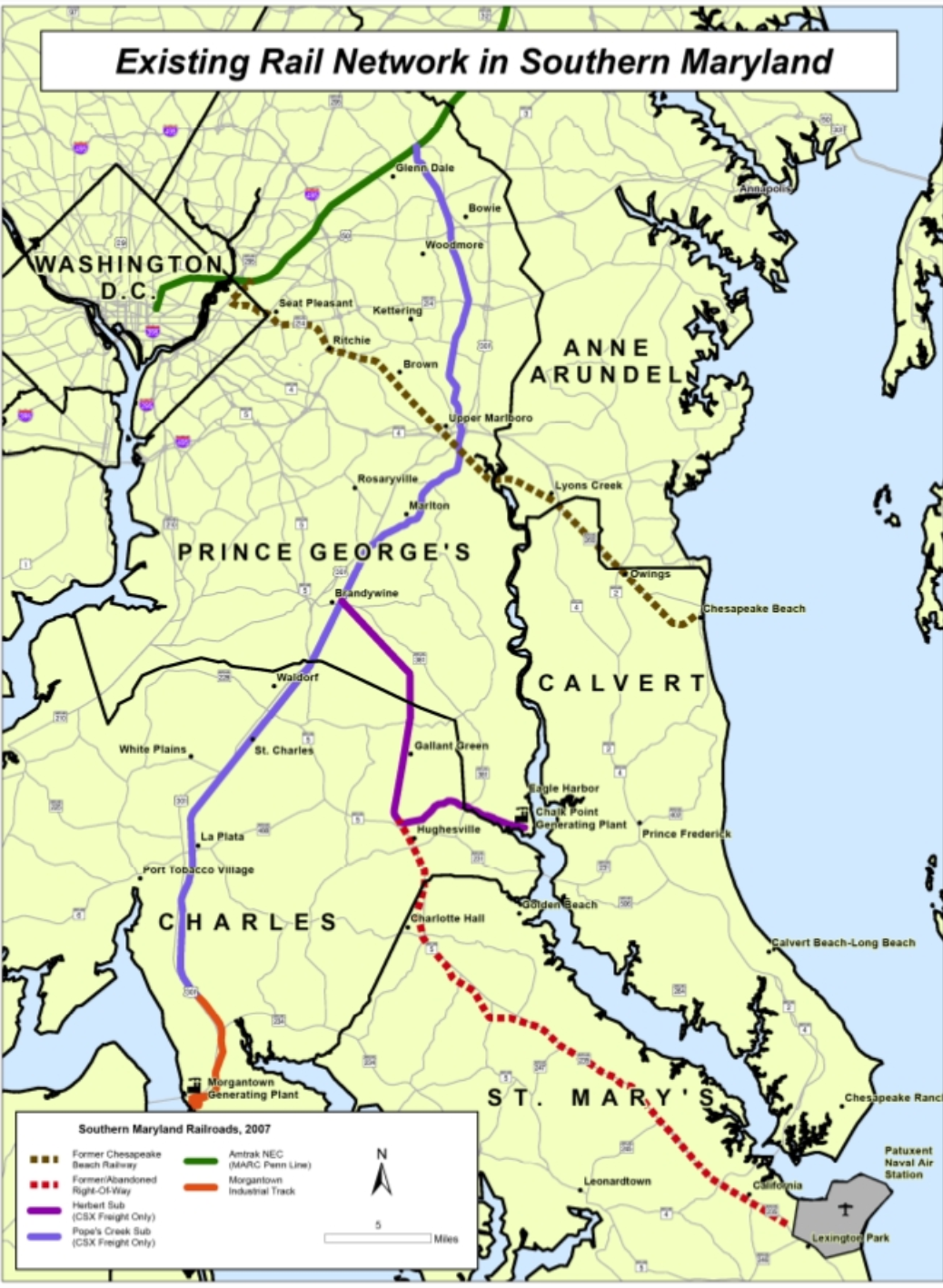
Source: Maryland Transit Authority
In 2009, the Maryland Transit Authority detailed a plan which would extend MARC service along the existing CSX right of way from Bowie to La Plata over Waldorf. Historically, this area has been isolated from the greater DMV with little public transportation access being one of the main reasons. In said report, they considered MARC service very similar to current commuter rail service to Fredrick. The infrastructure needed for this and any level of service is constant. It includes an overhaul of the signalling as well as a near consistent second track along the whole route. The cost estimate for this route in 2009, excluding the considered NEC upgrades as well as other branches, landed at around 500 million dollars (750 million adjusted for inflation). To put this into perspective, this puts the per mile cost just about one tenth that of the WMATA Silver Line. This makes this an attractive alternative to the lacking and traffic dependent service that current commuter buses provide the whole Southern Maryland area, which is only set to grow in the coming years, which includes the redevelopment of Six Flags which was recently announced.
Why now is the time to reconsider service

Source: Amtrak
Amtrak recently unveiled and took delivery of their first Amtrak Airo train sets. The most notable feature of these Siemens designed trainsets is their ability to run on electric overhead power as well as diesel with no change of locomotive, which is an issue that has plagued the Northeast Corridor most notably at Washington Union Station, as well as on the northern end of the NEC as well. This allows the trainsets to seamlessly transition to diesel power south into Virginia. One of the main issues with the MTA southern rail expansion was the locomotive switch as well as the awkward wye in Bowie, where the trains would turn and head towards Union Station. The existence of these dual mode train sets that contain two head units solves this problem. The train would simply travel north into Bowie from La Plata/Waldorf, and the train engineer would just have to walk through the train car and enter the opposite cab and continue the journey on electricity: no locomotive switch necessary.
Reframing into all-day service
In the proposal, the MTA only largely considered commuters to be interested in this service. However, with the increasing interest in Transit Oriented Development from real estate developers, Six Flags seeking redevelopment, and with La Plata and Waldorf largely already having good density, this is the perfect time for this proposal to be reconsidered in terms of all day service. While Metrorail headways are both unnecessary and not possible with mainline signaling, it is reasonable to imagine headways nearing 20 minutes. With this, a large load of trips can be completely served by this rail extension and connecting services. For example, a transfer in New Carrollton can let passengers transfer to the Orange Line or the newly opening Purple Line, or passengers can travel all the way to Union Station and transfer to the Red Line or the VRE. The rail line is also opposite a lot of largely undeveloped land, making it a treasure trove for completely new transit oriented communities to pop up.
2009 MTA Report: https://docslib.org/doc/5171532/southern-maryland-commuter-rail-service-feasibility-study
Amtrak Airo Announcement: https://media.amtrak.com/introducing-amtrak-airo/